
Re-awakening Myself
It has been five years since I first wrote Life Lessons: The Grace Of Being Human. Looking back now, I see how much has shifted within me and in the way I meet the world.
Abbreviated 2020 piece here
This past month I travelled solo across America. The intention was simple: to step outside the familiar, to create space to reconnect with my heart and with the fundamental parts of who I am.
I began in New York, walking through the quiet streets of very early morning Manhattan. Having finished a prior engagement, I was free to explore. I watched simple human life unfold, people keeping warm by the subway vents as I readied myself for a long train journey. It reminded me of the resilience I forget I have. It made me wonder what choices had been made differently between each of us, or what options were available to some and not others, that led us to live the lives we each were.
From there, I took the Amtrak to Chicago. On the 27-hour journey, the hum of the rails became a meditation. Watching the plains of Virginia and West Virginia slide into Illinois, I thought about how far I’d come from my early twenties, the coping strategies I once relied on and how much I’d learned to carry my own emotional story more gently.

In Chicago, I wandered through city streets layered with graffiti and murals, climbing stairwells that whispered history. The rhythm of the place stirred memories of my twenties in London: years spent wrestling with panic attacks, acute agoraphobia and the constant need to protect myself from waves of emotional overwhelm. Back then, survival was a kind of science. I’d count backwards in multiples, recite chemical equations or algebraic formulas, anything to keep my mind too busy to feel. The brain can’t emote and do maths at the same time. Between that and rhythmic breathing, I found ways to move from A to B.
Those early strategies were purely about survival. Meticulous planning became my anchor: working out how to get from fear to safety when the timing of buses or trains wasn’t on my side, staying hyper-aware in social situations, retreating whenever the world felt too heavy. Looking back now, I can see how those habits kept me safe, even if they also kept me small.
It was a period of expansion I didn’t yet recognise, growing beyond the invisible social barriers of the town life I’d outgrown, even as fear tried to hold me back. I never fit and perhaps that was the point. I was accepted onto a master’s degree in psychotherapy despite not being of typical age (40s). Someone saw potential where I saw only survival. I was still in my own therapy, still learning how to trust my nervous system, but it stretched me in all the right ways and helped me develop understanding and compassion for the clients I would one day work with.
Standing in a foreign city years later, I felt that same pull. Another expansion, though this time without fear. It was almost startling. I thought of all that it’s taken to grow from that young woman in London to the woman standing here today, breathing easily, no longer counting to stay safe, just breathing and staying present.
After a week I traveled to San Francisco on an almost 4 day Amtrak train, stopping off for a few hours a couple of times to climb and explore. On the train I wrote and explored trust: trust in myself, in my instincts and capacity to move forward without needing certainty at every step. Trust in others. Deep reflection but a far cry from those early days.

San Francisco offered a different kind of reflection. Standing on Ocean Beach, watching the sun set over the Pacific and the supermoon rise, I felt the vastness of life and how simultaneously small and enormous our place in it is. Consciousness places us at the centre of what seems like an endless external environment, yet we only meet that sense of inside and outside through perception. We are both the centre and a small part of out wider story.

Through each stage of travel, that awareness deepened through the smallest human moments. A group of kids playing volleyball after school, what teamwork meant to them. A street vendor pausing to offer kind advice. Homeless people helping one another, both their vulnerability and dignity in plain sight. A Palestine protest in San Jose where courage and solidarity filled the streets. Each encounter grounded the abstract idea of connection into something real and embodied, a reminder that witnessing isn’t theoretical, it’s a lived act of presence.

Behind the Masks
As an artist, I’ve spent years reflecting through meditation and my psychotherapy practice. Lately, a question has sat deep with me: who are we behind the masks we wear in our everyday lives? More specifically, what exists in the silence between our thoughts?
Over a two-year period, I’ve interviewed around 500 people across the world. Their responses revealed a shared humanity: the thoughts we keep hidden in fear of judgment, the parts of ourselves we deem unworthy, the truths we believe would be rejected if spoken aloud. The dreams unspoken or not given room to evolve. The hopes, the sadness, the joy, the pain. The whole array of humanness.
When people dared to share even fragments of that inner world, they felt seen. Truly seen and less stigmatised.
The courage to witness both others and ourselves is transformative. I know this through my therapy practice, but I hadn’t considered the depth of the gift.
It doesn’t always feel safe and not everyone is ready to look or be seen. Nervous systems are key to how we feel. The lives we’ve lived inform that system. Sometimes something can be good for us but feel wrong or uncomfortable because it creates a cognitive dissonance between body and mind. Sometimes it’s easier to stay safe and familiar, but that doesn’t mean it’s always right. We can’t know unless we try. That’s what I learned in my growth. I have deep respect for what it takes and each person’s resilience is their own. The act of looking, of acknowledging, of listening even silently carries enormous weight. Not only in the presence of others but equally within ourselves. Our bodies are listening to everything we tell ourselves.
Thinking about this brought up my nervous system’s processing of fear and past attachment patterns. The memories come in waves and it can be hard to sit with. This is healing, however.
Healing isn’t pretty, just like meditation isn’t about bliss. It’s about noticing what is there and becoming honest with ourselves in a deeply compassionate way. Protection from pain and vulnerability helps us survive in difficult moments, but when it becomes a habit it can take over and begin to restrict us. Healing is hard whatever the reason, big or small. Being present with the honesty of ourselves can be challenging in moments, for some more than others.
The Shadow and the Light
My artwork has always been an amalgam of these human responses. I strive to capture shared emotion and shared experience, to distil it into something visual, tangible and meaningful. That is what I enjoy: giving form to the collective pulse of our humanity. While I ask questions of others I simultaneously explore further my own inner world.
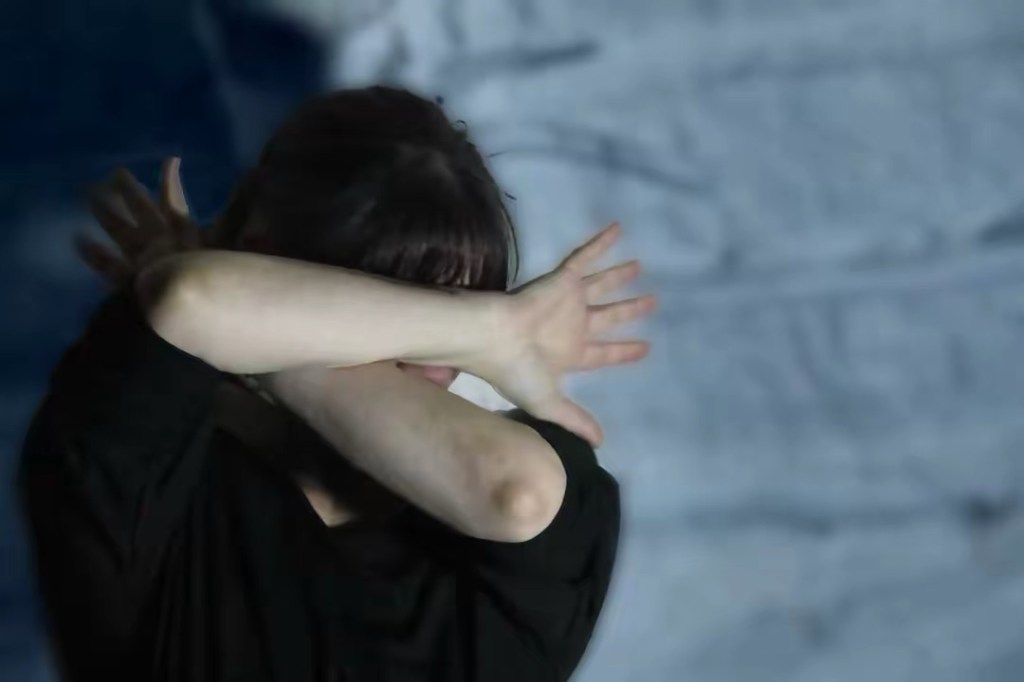
I begin the process of this particular artwork by touching into some of the shadow sides of our shared humanity, but of course it isn’t the full story. There is also much joy, connection and ease. We experience all of it in different ways and moments.
I chose this order because in creating and naming the contrast, we can identify that there’s hope and I want people who might be struggling to know that. We cannot know light without dark, nor appreciate and have gratitude for the light in our lives if we don’t recognise the dark.

This is the human condition: the untamed, wild mind roaming free, projecting and feeling and it is natural. The shadow is natural. Often, we are having normal responses to abnormal circumstances yet are taught it’s the other way around.
Life isn’t balanced; it’s an ebb and flow of experience, sometimes challenging or harrowing, sometimes stressful, other times peaceful and fulfilling. It can change moment to moment, day by day, season by season and the memory lives inside us. Sometimes it stays to keep us safe; other times to remind us that everything is temporary. Impermanence.
Not everyone has experienced trauma, but even on a basic human level, we can understand pain and sadness. This is universal and it’s where the work begins. Untamed, imperfect, emotional. The human condition, raw.
Returning to the Past, The Silence Between My Thoughts
Reflecting now, I return to a piece I wrote in 2020 (link above). At that time, my world had fractured. Everything I thought to be true about safety, about love, about myself had shifted or disappeared.
In the last ten years, I’ve been living in a frozen state of depression. Despite my therapeutic training, I didn’t recognise it within myself. I was only functioning. I was surviving not thriving and my physical body was beginning to mimic this. I didn’t see it. I was getting up every day and carrying on with life, albeit more and more restricted but that was explainable. I had an illness. Unaware of actually how deeply affected I’d been by the events of 2015 and what ensued for years after in their entirety.
Living under the shadow of a lifetime of emotional unavailability taught me fear, careful vigilance and the necessity of protecting my heart.
This time away has mattered. Being with what’s here, finding honesty in what feels safe, defining what healthy connection means. I would wish that for anyone. It’s about creating something that feels balanced, safe, appropriate and aligned because without that, we don’t thrive. That’s true not only in connection with others, but in how we create, express, and make sense of our place in the world. How we also connect with ourselves.
I wasn’t ready to be open, to trust, to let my most vulnerable self be seen. Yet, recently I came to trust that it was only in opening that I could learn about myself, about attachment, fear and resilience.
It’s only in the last couple of years it has shifted. The pattern I’d been stuck in and unaware of.
I’d been telling myself all sorts of stories about who I was, my value, my worth. Slowly imploding for years while appearing to exist well on the outside. I didn’t know until I did. When I finally saw it, I chose change. Shy at first but in my own way trying to embody and own it.
It means being more present with what’ is more honest. Respecting my own boundaries, something I’d never done before. For most of my life, I have bent and adapted those boundaries until I was almost unrecognisable to myself, all in the hope of some tiny piece of love and acceptance. Fear of abandonment. Yet the worst had already happened and I was just relaying it. Anything was better than nothing, or so I believed. That’s how much value I had placed on myself.

It’s sad to realise that I had suppressed my truth just to feel any form of love even in the tiniest crumb. I tried to deny my own illness because I felt rejected. I still carry that. I still fear more rejection as a result.
I don’t look at anyone else with illness or disability and think that of them. I’m learning now to be with that. To accept that it’s okay to have an illness. It’s okay to have needs. Even when it doesn’t suit the people around you. It’s okay to be yourself, even when you don’t fit or it makes others unhappy as long as you are being honest within yourself and not purposely harmful.

I’ve stopped asking whether I’m worthy of love. That was never the question. Instead, I’m asking: what are my needs? What does love and care mean to me? How does it sit within me? How do I recognise it when it’s there? Is it safe, does it respect rather than take or hurt. What is healthy? I have my answers but it has taken a long time to get here.
It has been really hard having to look at this wound. Experience has taught me abandonment. I’ve had to learn that safety begins within me.
When I reflect back five years to when I wrote The Grace of Being Human, I remember how lost I felt, fractured, trying to find myself after deeply destabilising experiences. It’s not about judging anyone involved; people have their reasons for what they do. However it is ok to recognise that the effect on me was devastating. I learned to survive on intermittent reinforcement, that tiny bit of something meant I was worthy. How mistaken.
Looking back, it is painful to see. I had to sit with the truth of what I’d done to myself in that process. I had abandoned myself. Completely.
I now have clear boundaries. Not rigid walls, but more gentle awareness. Awareness of what does and doesn’t feel safe or best for me, of what does and doesn’t feel right. I’m not wrong for needing balance, for needing mutuality and maturity of presence. In any caring relationship, friends, family or partnership.
I’m under no illusion it’s easy or without struggle, it is about honesty and presence. Showing up. Being human,
Learning to Trust Myself

I began to recognise my own attachment style: anxious at times, protective by necessity, shaped by early experiences and the learning in adult life.
I discovered resilience. Learned to trust my instincts, to respect myself even if it meant upsetting people. Not purposefully, not with malice just respecting any misalignment and personal boundaries.
These lessons were hard and profound.
Healing in Relationship and Self
Healing does not happen in isolation. It also does not happen in the same place where we broke either.
Over the past years, I’ve learned to love and support my own inner child, to give her the compassion and recognition she was denied. I wish that for any person with that inner need. May you find the love for yourself. It doesn’t erase pain, but it transforms the relationship to it. These last years have been about reclaiming my life, my voice and my heart.
Our shared humanity is reflected in these patterns in friendship, in family, in love… in connection. We are all navigating our inner landscapes, often silently and often imperfectly. Never linear, never tidy.
Grace in the Everyday
Being present is not light. It demands courage, patience and self-awareness. It demands that we look beneath our masks and dare to see ourselves, fully and without judgment. It demands that we see others, fully and without judgment.
That, I believe, is where grace lives.
This journey has reminded me that life’s lessons are rarely clean or easy. They arrive uninvited, often disguised. Yet they can also carry insight, clarity healing and connection.
To live fully, I’ve realised, is to embrace both the darkness and the light. To face our vulnerabilities, honour our instincts and witness both our own hearts and the hearts of others. In that witnessing, we discover grace: the quiet kind that lives in everyday moments of courage, honesty and being seen.
Over time, my art has become the meeting point between that inner and outer visibility. A bridge between what’s felt and what’s shared, what’s hidden and what’s revealed.
The Art of Being Visible
In my work that idea of being seen has taken on new meaning. I’ve realised people want to witness more than the finished pieces. They want to see the process and the artist in motion. That’s hard. Being visible in that way feels deeply unfamiliar on social media. That isn’t my comfortable place. I don’t mind writing and sharing my honesty but the added visibility feels not right for me.
TikTok has become my testing ground. It’s small and low-pressure because AI has replaced the algorithm changing engagement now keeping it light, which makes it feel safer than other platforms.
It’s a space to experiment with showing myself briefly, to see how it feels to be visible without losing myself in it.
I’m still not comfortable. I take it down again. It doesn’t feel natural. I’m learning to find my rhythm to share in a way that honours both my work, the way people want to engage and my boundaries.
It’s a delicate balance, opening up while protecting the parts of me that still need gentleness. Even in that discomfort, there’s something quietly freeing about realising I can be seen, that I can exist in the light of my own creation and still hold onto what’s sacred. This testing period has had a mix of different approaches and I haven’t found the right one yet. I still prefer to be mostly hidden in that visual way but I’m trying.
I’ve even shown myself purposefully imperfect, just to see how I sit with the discomfort. Recently, during an MS relapse, I was working with movement and dance while supporting my assistant photographer to develop her camera skills. She captured many moments some perfect, others in between. Including the way my left side wasn’t in sync with my right, as if moving through a delayed process. I had turned but my left leg hadn’t followed through. I decided to let that be seen. I could have shared the moments that were “right,” but instead I chose the unfinished ones. The imperfect ones. The moments in a wobble, falling out of position with the wrong arm balance and posture. It felt important to show it and feel into it in that moment. To be with the honesty.
Imperfect, but real. My inner critic was loud indeed, but I left those images up until I learned to quiet that voice. I have MS, it is a miracle I can do any of it. So if a relapse knocks me off, slows me down and makes my muscles cramp and I tire easily then that’s the truth. As long as it’s safe, it’s okay. Once I felt comfortable with that truth, I took it down. I was strengthening the emotional heart muscle to embrace discomfort. The process has been experimental. Small, deliberate moments of allowing people to see behind the scenes, to witness the practice of visible presence in its rawness even when wrong. I do however much prefer the polished version as I’m sure many do.
_____
Your story, my story, our story.

 Stacie Amelia Fine Arts & Creative Journaliam