This year I felt very privileged to be invited behind the scenes with the crew to see the festival from the inside out. What stood out most was the level of teamwork, effort and all the different facets that have to come together in order to bring something of this scale to life.
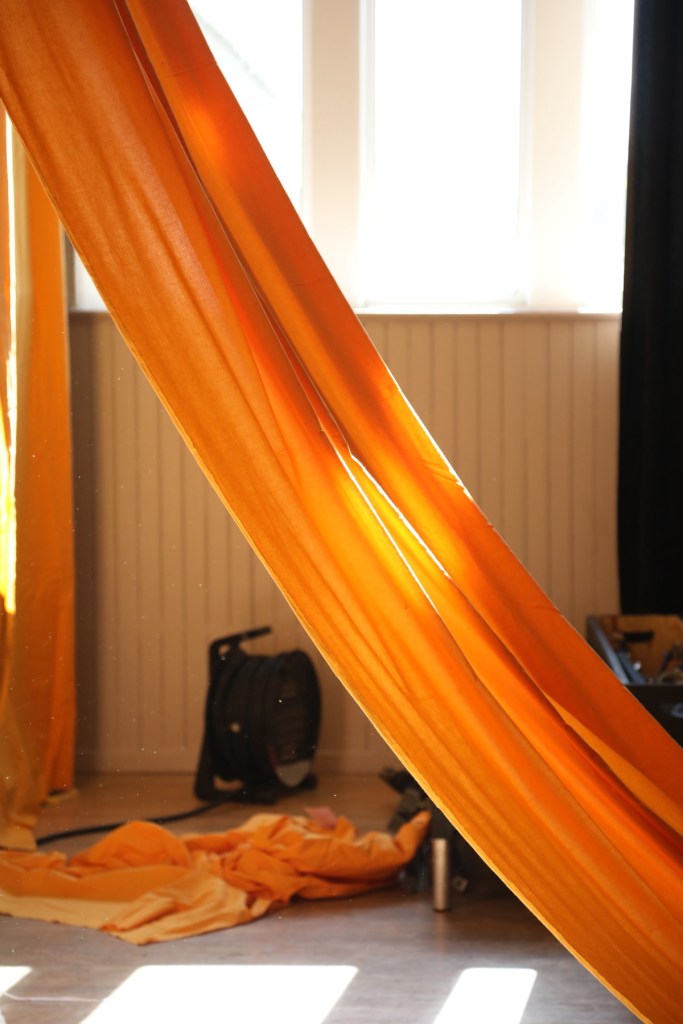
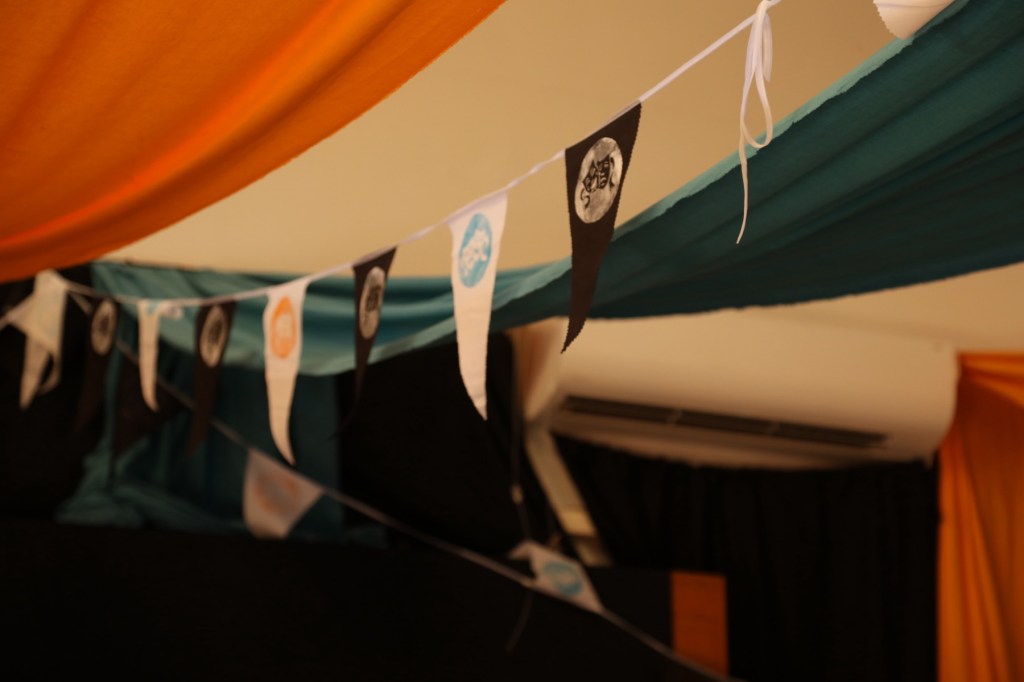
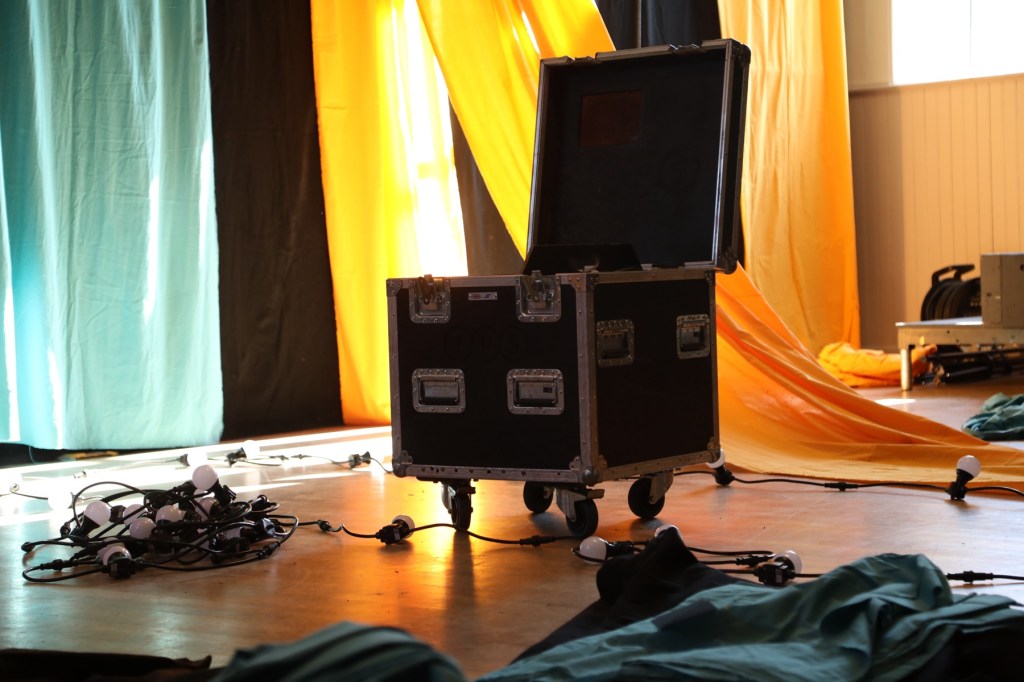
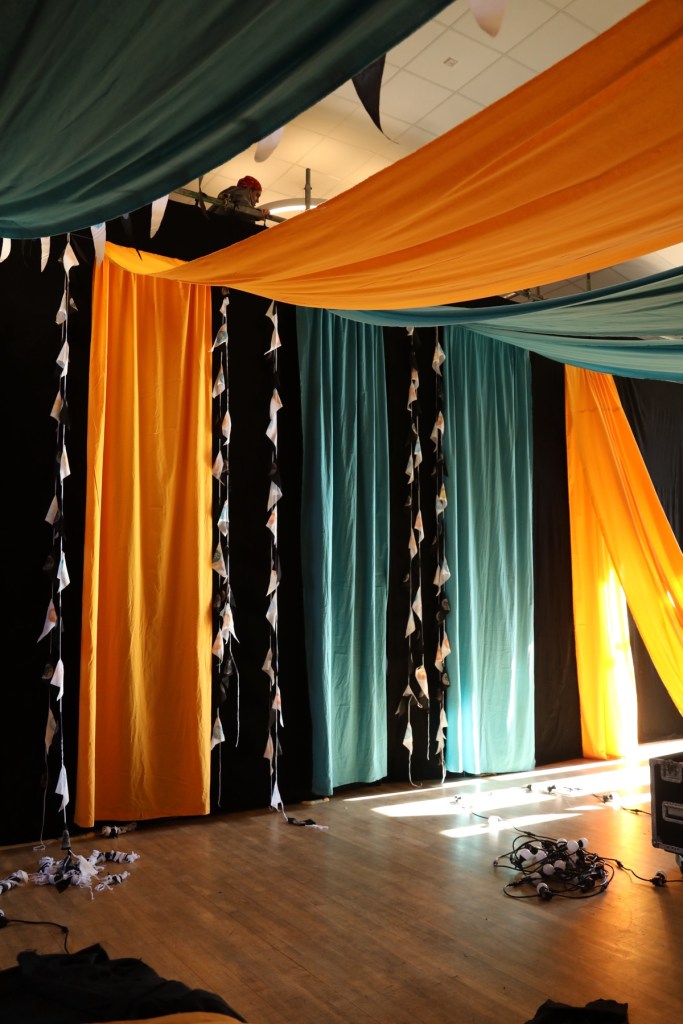
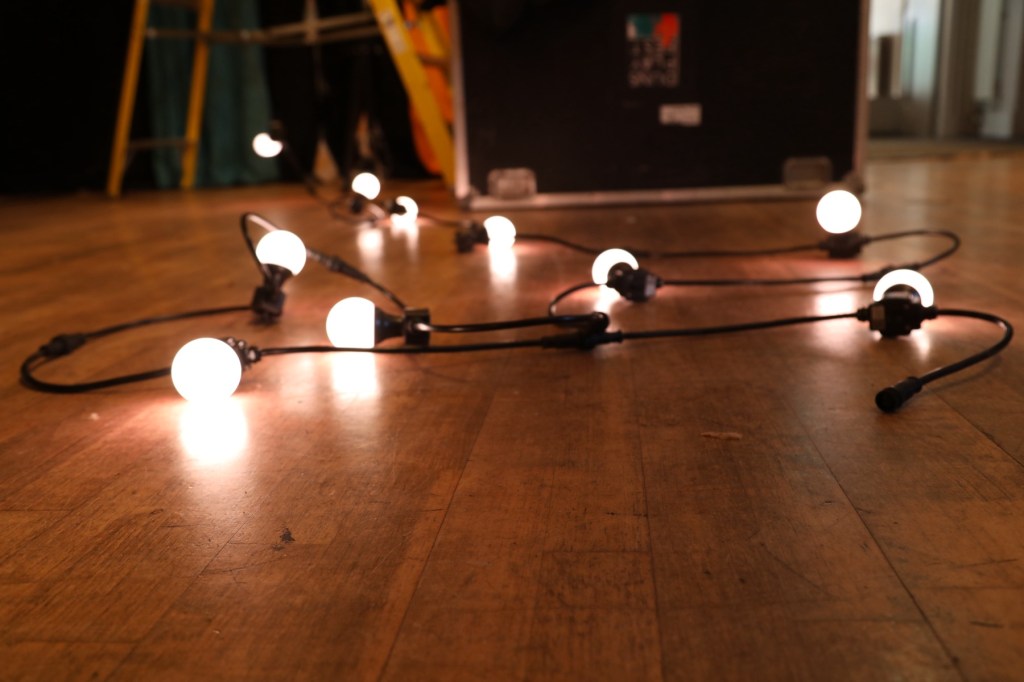
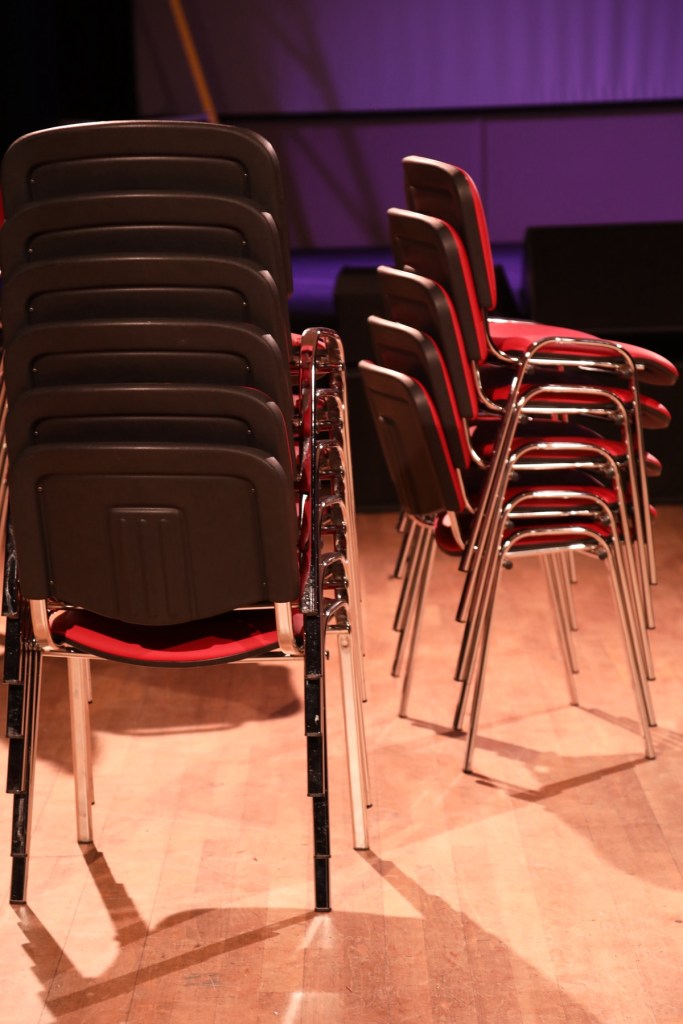
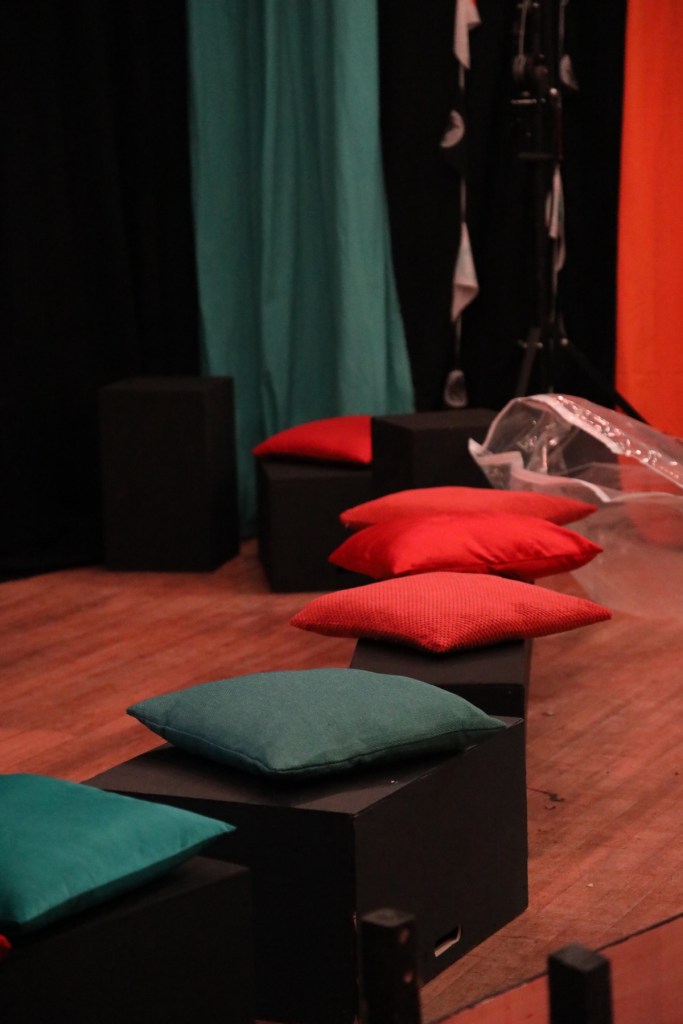
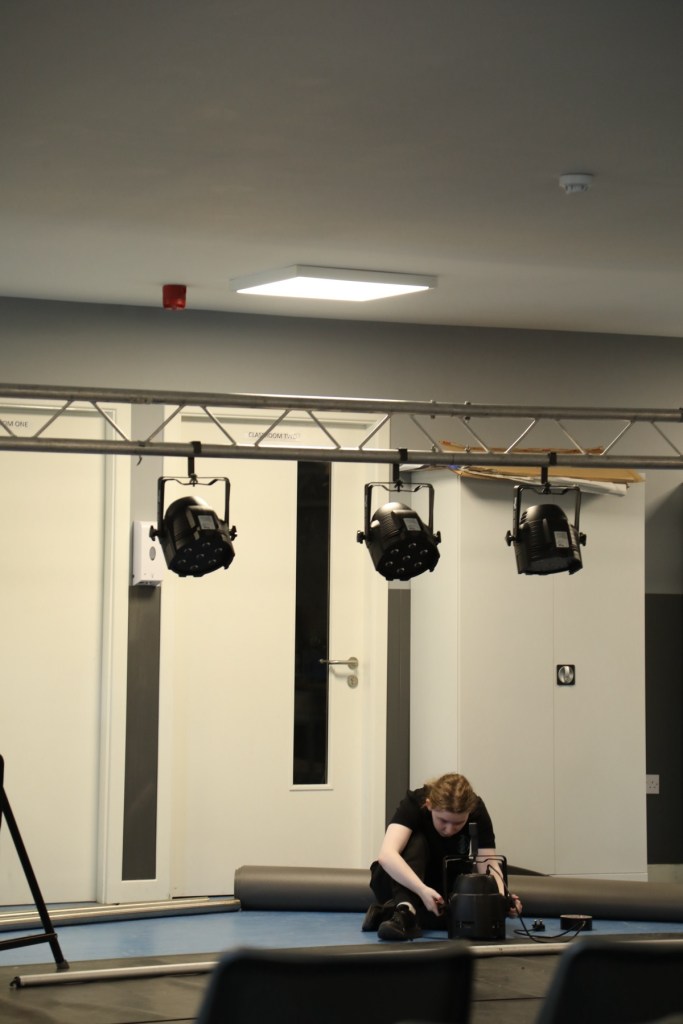
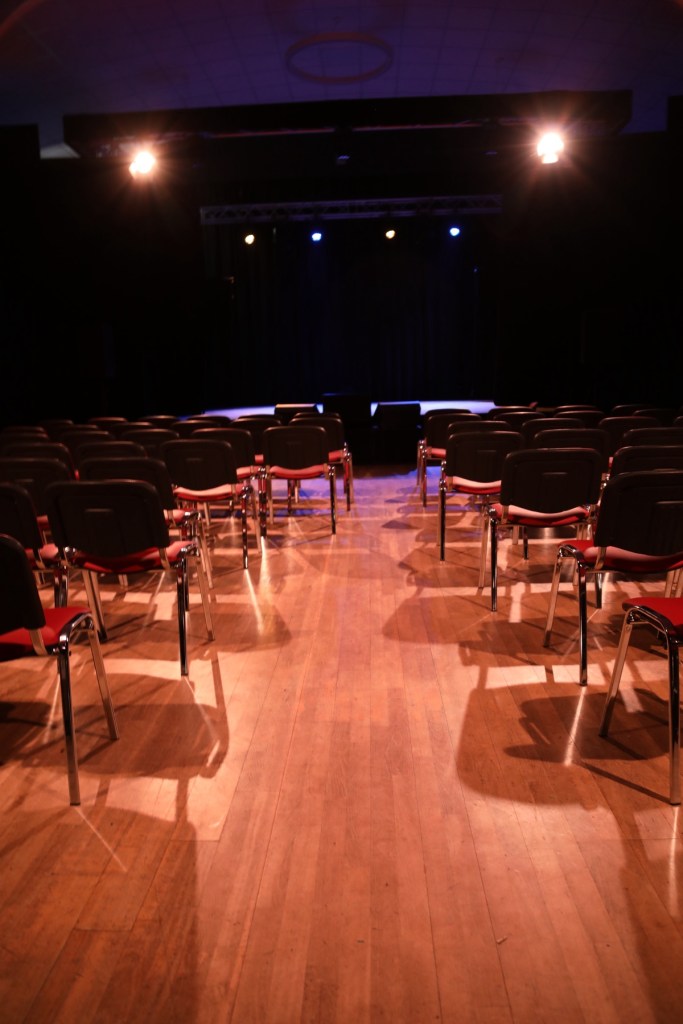
I was there from the get-in which is the set-up of the aesthetics, stage area and spaces in The Heart of Duns, the community volunteer hall and also the Cadet Hall right next door. I was present until the get-out which is when everything is taken down, apart and put away so that the hall regains its natural state. Seeing both ends of that process changed the shape of how I understood the festival.
I already had a deep sense of what goes in, how it was co-ordinated by all involved and its flow. This time I saw the inner workings of it. The thought processes, the structure, the decisions made in real time and the way people engage with each other to keep everything cohesive, inclusive and functional.
It is no easy job. Things shift from moment to moment and everyone has to stay adaptable and at ease with change. It was awe inspiring to observe and to be part of.
I was taking photographs and interviewing people front of house, crew, audience and of course the performers on stage. What came back consistently from every angle without exception was a felt sense that Duns and the festival holds a community that is warm, open and welcoming. Resoundingly.
To have this embodied sense come back so coherently from all directions is extremely rare. It speaks to something very specific at the heart of the festival and the people who make it happen.
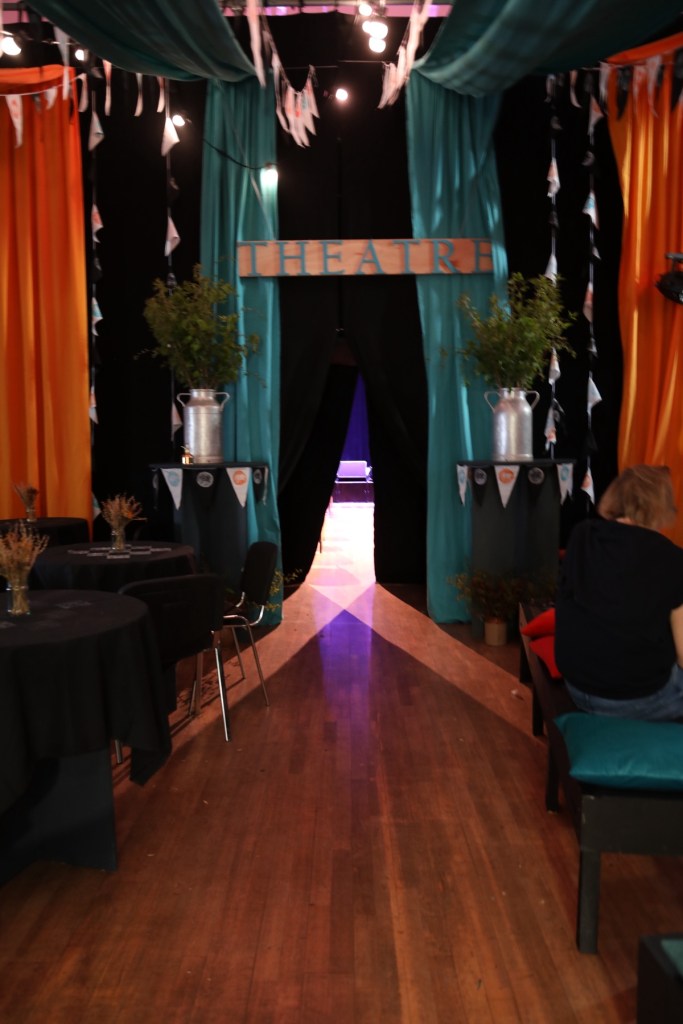
In the Wings: The Young Crew
There’s a particular kind of energy in the background that never makes it into the audience view. It’s not separate, but it moves differently. Always adjusting to what’s happening out front.
What came through most clearly this year was from the under-25 crew. Their sense of the people, the atmosphere and the feeling of being part of the festival is one of profound community. One described it as a warmth created from the different members and it just felt like home. Another went further, saying it felt ‘weird’ knowing they were going to leave and they would prefer to just stay.
That sense of belonging doesn’t arrive as a single moment. It builds through repetition, working alongside the same faces for nine to eleven days. For under-25s especially it become something recognisable and homely very quickly: they arrive plug into a rhythm and start moving with it instantly as if it is the whole of life.
Much of their experience sits in the practical work that keeps the festival moving. They talked about their differing roles in stage management, tech, ushering and supporting the performers. One described being ready for props that might have been left at the side and making sure everything was in place ensuring performances can run smoothly. It’s not framed as abstract responsibility, but as constant, grounded activity: helping, checking, counting and adjusting.
Everyone kept moving and that repetition of motion run through much of what they discussed. Nothing stood still long enough to sit outside of it.
A key part of their experience was how the work sits inside a live system. Things change quickly. They talked about needing to be ready and working so that the audience experienced a smooth festival. It is responsive work shaped by what is happening in a moment as well as following plans.
From the wings they also see the performances in a way the audience didn’t. Not just the finished show, but the build-up, the transition and the small adjustments that held everything together. One described it almost like getting little windows into a show as it’s being prepared and watching it come together before it fully reaches the stage. That perspective gives the work a different kind of feel, more intimate. They saw what brings and held it together, not just what was presented.
There was a clear contrast in how they described this festival compared to other spaces they’ve worked in, environments described as ‘big ones’. This one, although ambitious, amazing and vast is different in tone. It felt less commercialised and more personal, cohesive and community where everyone is just everyone. That difference matters. It is not just scale, it is familiarity. People know each other. Come back each year and reconnect. It is a community within a community.
That continuity showed up in how they talked about returning. Not framed as obligation or routine, but as something that naturally pulls them back in. The environment feels steady enough that you can step away and re-enter without losing your sense of place. It created an ease in how they feel they belong and in turn move through the work.
The pace itself is busy, it is constant activity with shared awareness. People just get on and engage. There’s a sense that things are moving with the flow, not against it.
Across their responses what stood out is how naturally they felt they moved between tasks and roles. Tech, support, co-ordination, counting and assisting. It’s fluid rather than segmented. Underneath that is a quieter consistency: an understanding of rhythm in the space and each adjusts to it as it unfolds.
What also emerged is how much they valued seeing the process from the inner working. Behind the scenes. Witnessing the mechanics of how things come together in real time. That view from the wings became part of their core memory and the experience itself.
There’s also something in the way they described the overall atmosphere. They spoke about how lovely and supportive it felt and how everyone was so welcoming. It’s not sentimental, just matter-of-fact appreciation for how people behave in the theatrical world.
The festival is held together through repeated, practical actions: setting up, adjusting, responding and staying in step with what’s unfolding on stage. A steady, shared rhythm just out of sight, where the flow of everything is quietly kept moving.
It was deeply heart based to hear how the space allowed people to experience each others authenticity. Outside of the festival they described themselves as feeling as if they don’t fit and are often referred to as odd. They find this difficult, heartbreaking and isolating. It is hurtful. Here they felt they belonged and were embraced for their unique qualities. Their voice and contribution mattered, were fully respected and trusted.
It felt sad for them when the festival came to an end and they were to return to their everyday lives. Three different young people spontaneously expressed versions of the same feeling with equal enthusiasm: that this is the best event of the year and something they always look forward to. Although they feel sad when it ends they know it will return soon and they can once again be with people they feel good with.
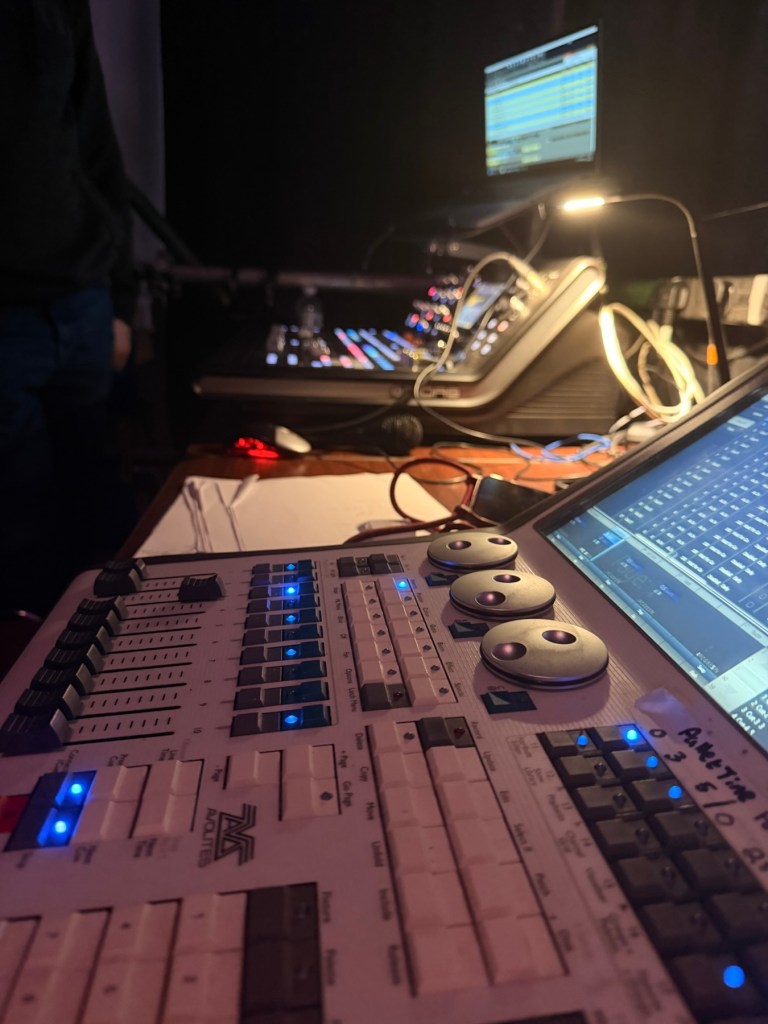
The Intergenerational Impact
What became increasingly clear throughout the festival was that this was never simply about performances or events. It was about people. About participation. About being part of something larger than yourself and knowing that your presence within it matters.
What struck was the intergenerational nature of that experience. Not in a tokenistic sense but in a lived and visible way. Families were woven throughout the fabric of the festival. Some of those helping build and run the event were doing so alongside their children or returning year after year with families who have grown up around it. The festival is not separate from their lives. It forms part of them.
Speaking with younger children was fascinating because their observations were so direct and honest. One young girl became my ‘super top secret journalist’ and together we wandered through the festival asking questions about what she noticed around her. Her observations were wonderfully simple. That there were lots of people wearing glasses. That many people came with husbands, wives or different kinds of partners. That there were people of all ages and lots who were much, much older than her. She was amazed by how busy everything felt and delighted by the music and the freedom to sit at the front and sing along when she knew the songs.
She spoke with particular excitement about singing and the joy it gave her. Another young person talked about storytelling and how listening to stories made them feel happy. Others spoke about the family day and dressing up in costumes trying theatre and acting like the adults on the stage. One child described the excitement of being able to run freely through the grounds and simply be outside in a space that felt open rather than the playground at school.
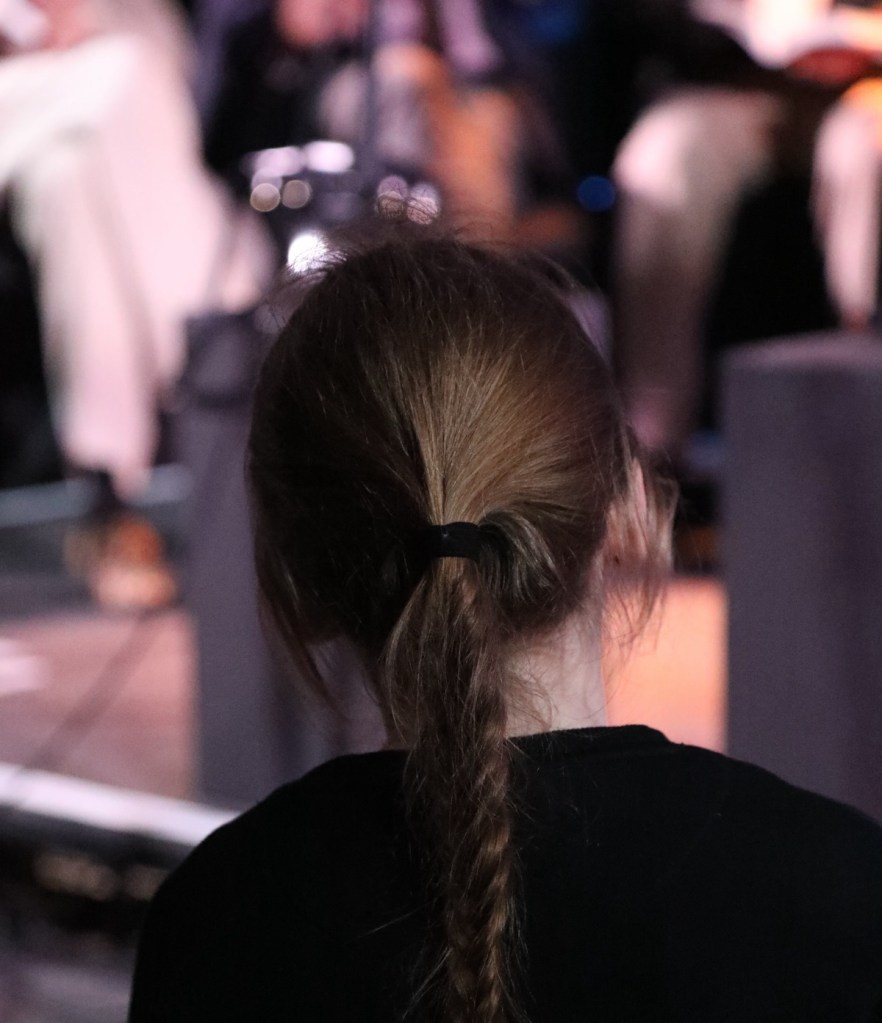
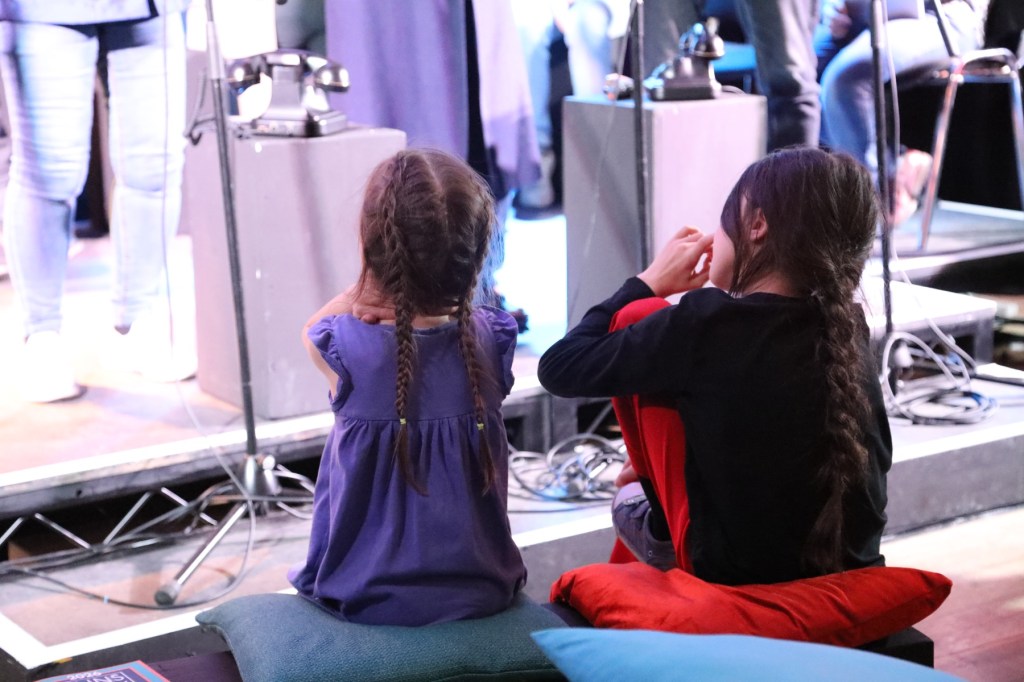
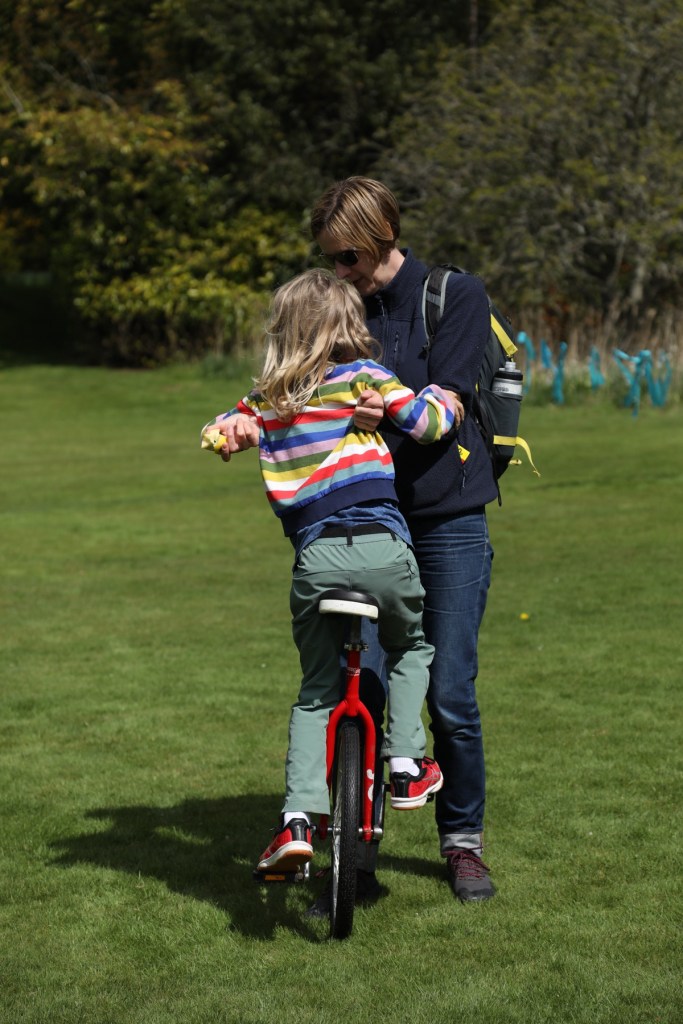
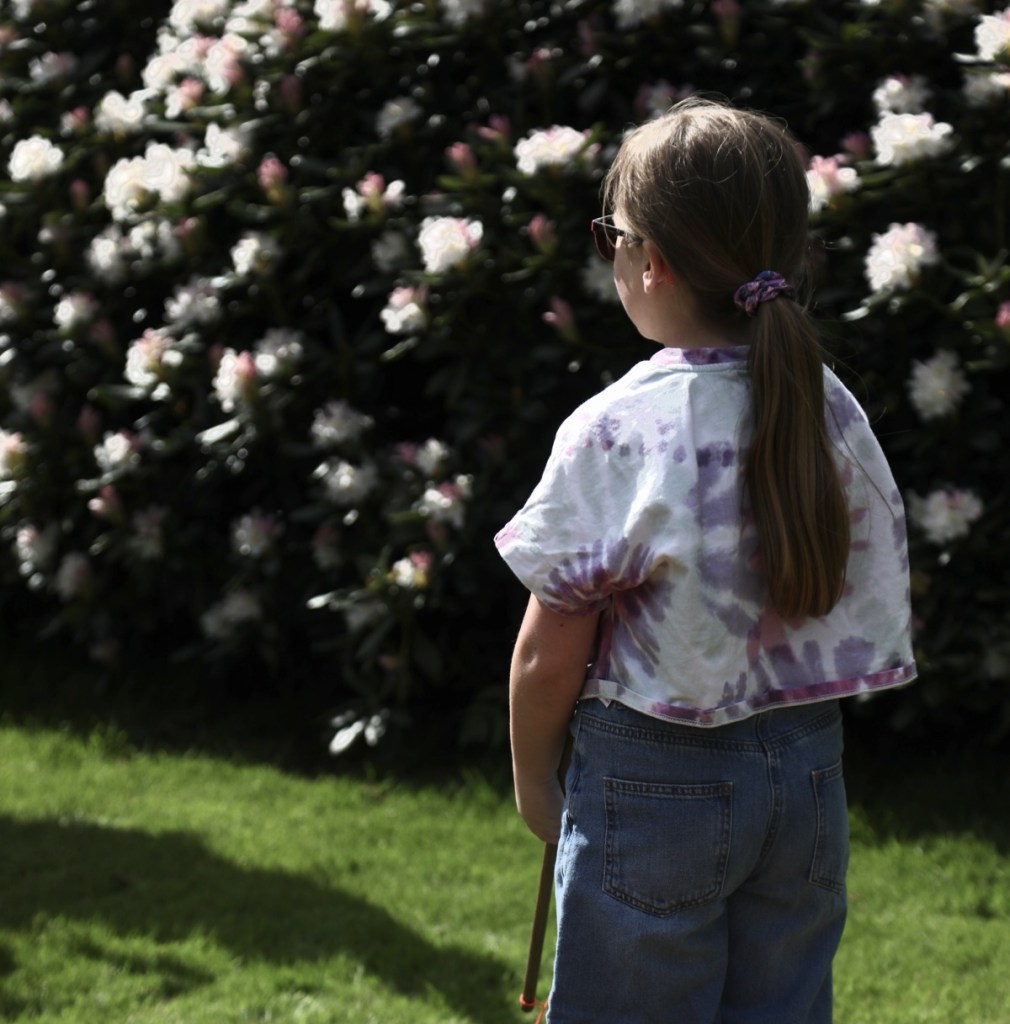
For the older children and young adults there was a different layer of importance. Many spoke about helping their parents or carers fulfil the roles they had committed themselves to within the festival. Supporting them mattered. Being included in that world mattered. It gave them a sense that they too had a role within something meaningful.
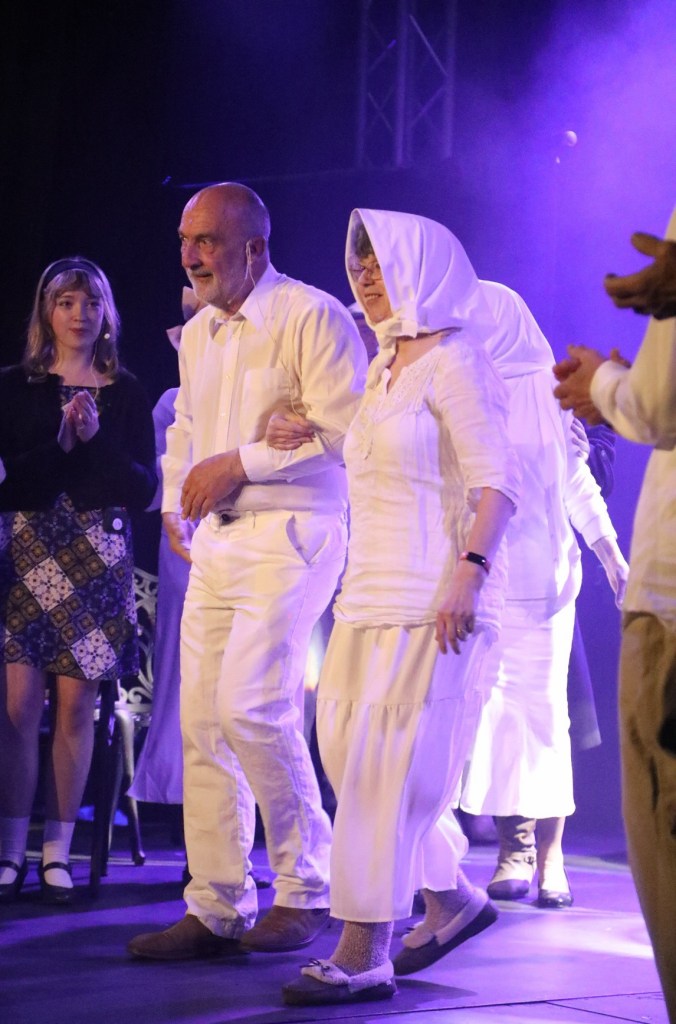
At the other end of the spectrum I spoke with older audience members and volunteers whose reflections carried equal weight. What stayed with me most was how many spoke not simply about enjoyment but about purpose. Several people told me they return every year because the festival gives structure and meaning to their lives. One woman quietly admitted that when the festival ends she never quite knows what to do with herself because for those nine days she feels connected, involved and no longer alone.
Another described how important it was to still feel useful and creative as she got older. Others spoke about volunteering front of house, checking tickets, counting audience numbers and helping people move between spaces. Their roles may have seemed small from the outside but to them they were deeply significant. They were part of something shared. They were needed.
Again and again the same themes returned. Inclusion. Participation. Connection. Purpose.
In a time where isolation is becoming increasingly common across all age groups there is something profoundly important about spaces like this. The festival does more than entertain. It creates opportunities for people to engage with each other meaningfully across generations. It allows children to feel heard and involved. It allows young people to feel trusted and included. It allows older members of the community to remain active, visible and valued.
That is not small.
What DunsPlayFest seems to understand instinctively is that community is not built solely on performance. It is built through participation. Through making space for people to contribute in whatever way they can. Through recognising that value exists at every age and every level of involvement.
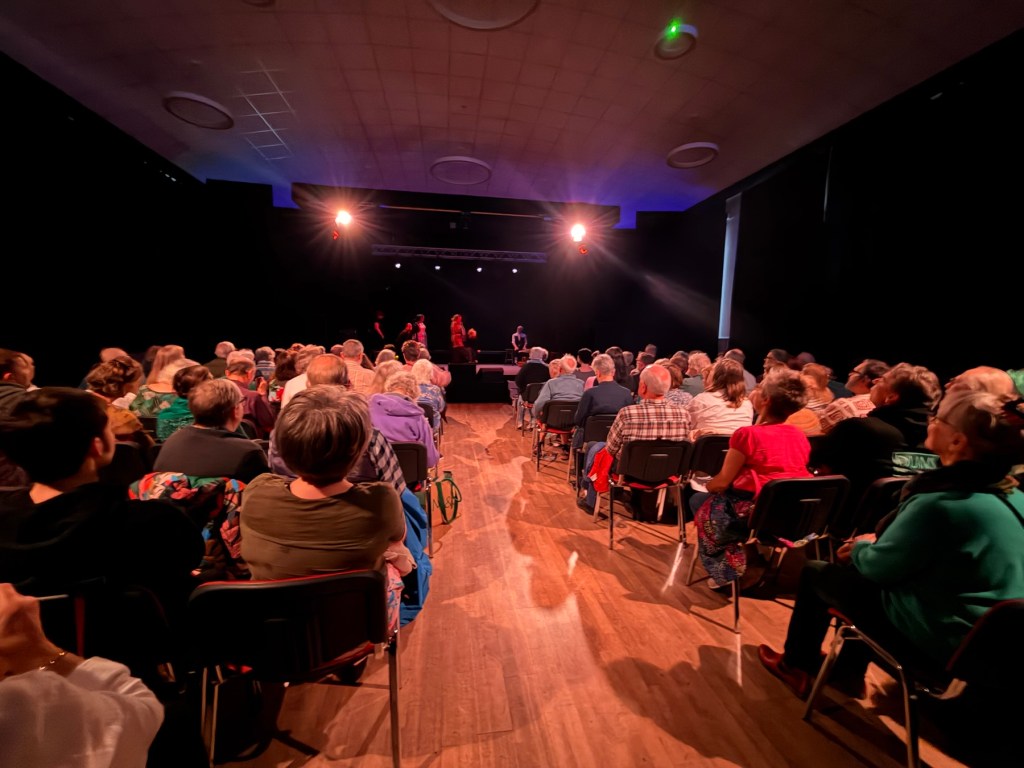
By the end of the festival what remained with me most was not simply what had been staged but what had been created around it. A temporary space where people felt connected to one another. A place where creativity became a meeting point between generations and where people left not just entertained but included.
Perhaps that is the real achievement of the festival beyond the main purpose of bringing new and accessible theatre to the Borders.
 Stacie Amelia Fine Arts & Creative Journaliam